


There are two species of triggerfish that are hunted by fly fishermen on the shallow flats of Indian Ocean atolls. The yellow margin triggerfish and the larger titan triggerfish. Both of these fish are extremely challenging to catch. They are nervous and shy and extremely aware of everything happening around them. Triggers cruise around the shallows, tailing and feeding oil chunks of coral, crabs, worms and shrimps that they come across in their wanderings.
They are cryptically coloured, blending into their surroundings of sand and coral, and are difficult to spot if they are not moving.
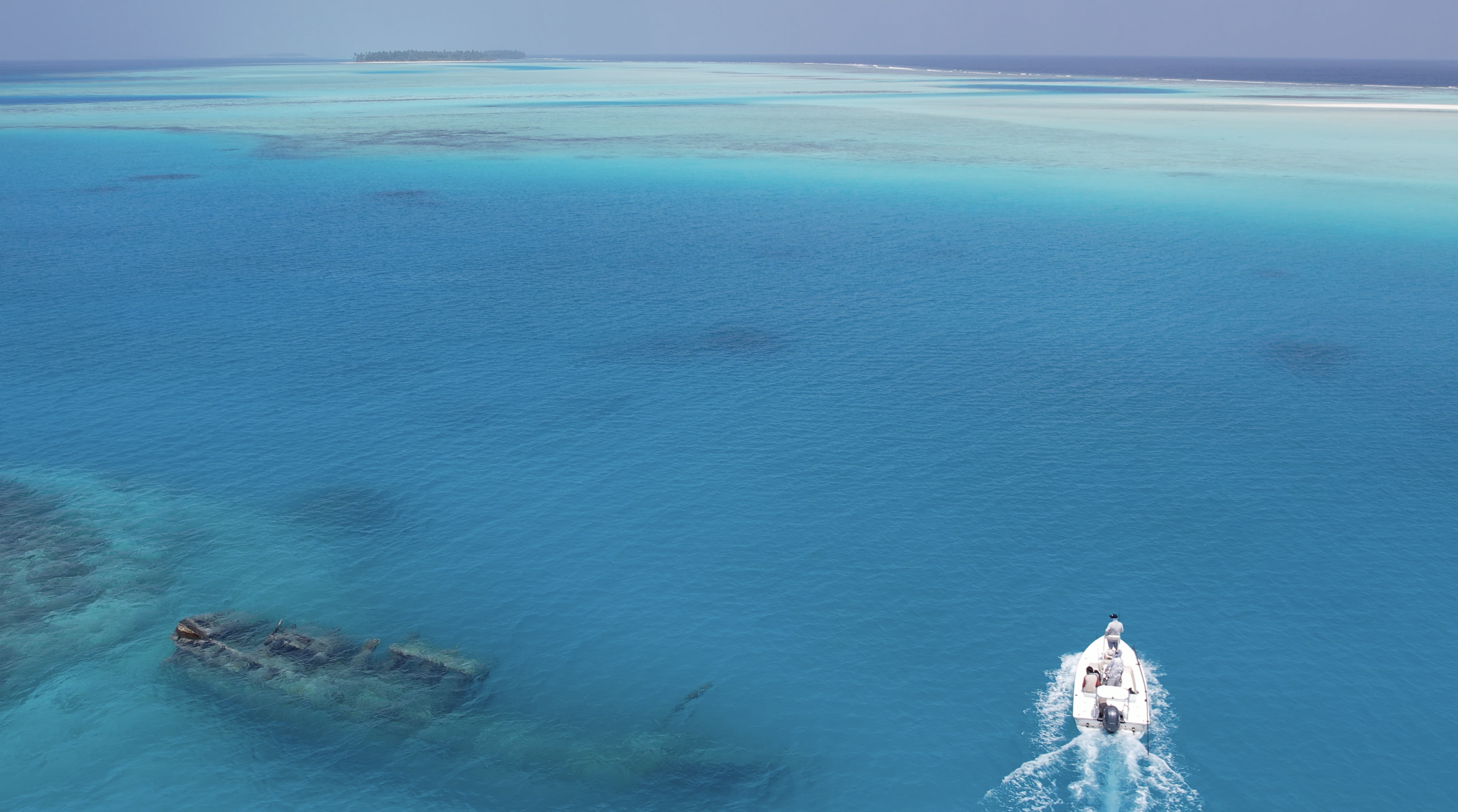
On a recent trip to Como Maalifushi resort on Thaa atoll in the Maldives, I had the opportunity to take on the challenge of trying to catch one of these trigger species an artificial lure. I have caught them on fly before, which was a difficult achievement and now I wanted to tick that box on light tackle lure gear.
The most challenging aspect of doing it this way is that triggers are very sensitive to the plop of a fly or lure landing on the water’s surface anywhere near them. If they sense that plop they immediately flee the flats, turning onto their sides and streaking off in search of the security of deeper water.
I had to use very light lures to try and minimise the sound of them landing. Very light lures require very light tackle to cast them effectively, so I had to go as light as I dared, bearing in mind that these fish head for the safety of coral bommies when they are hooked and if they are not stopped from reaching them, will quickly cut the line on the sharp coral.
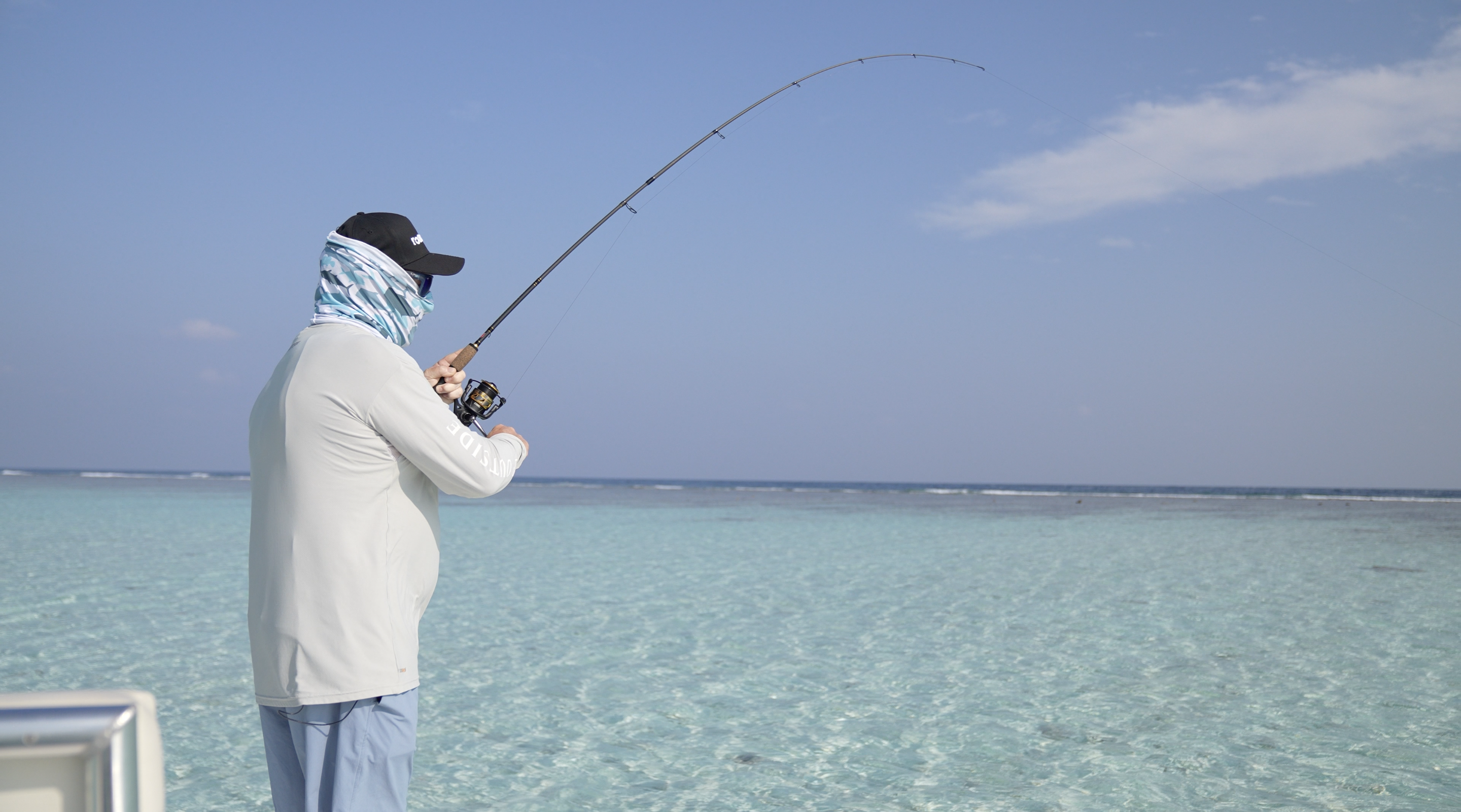
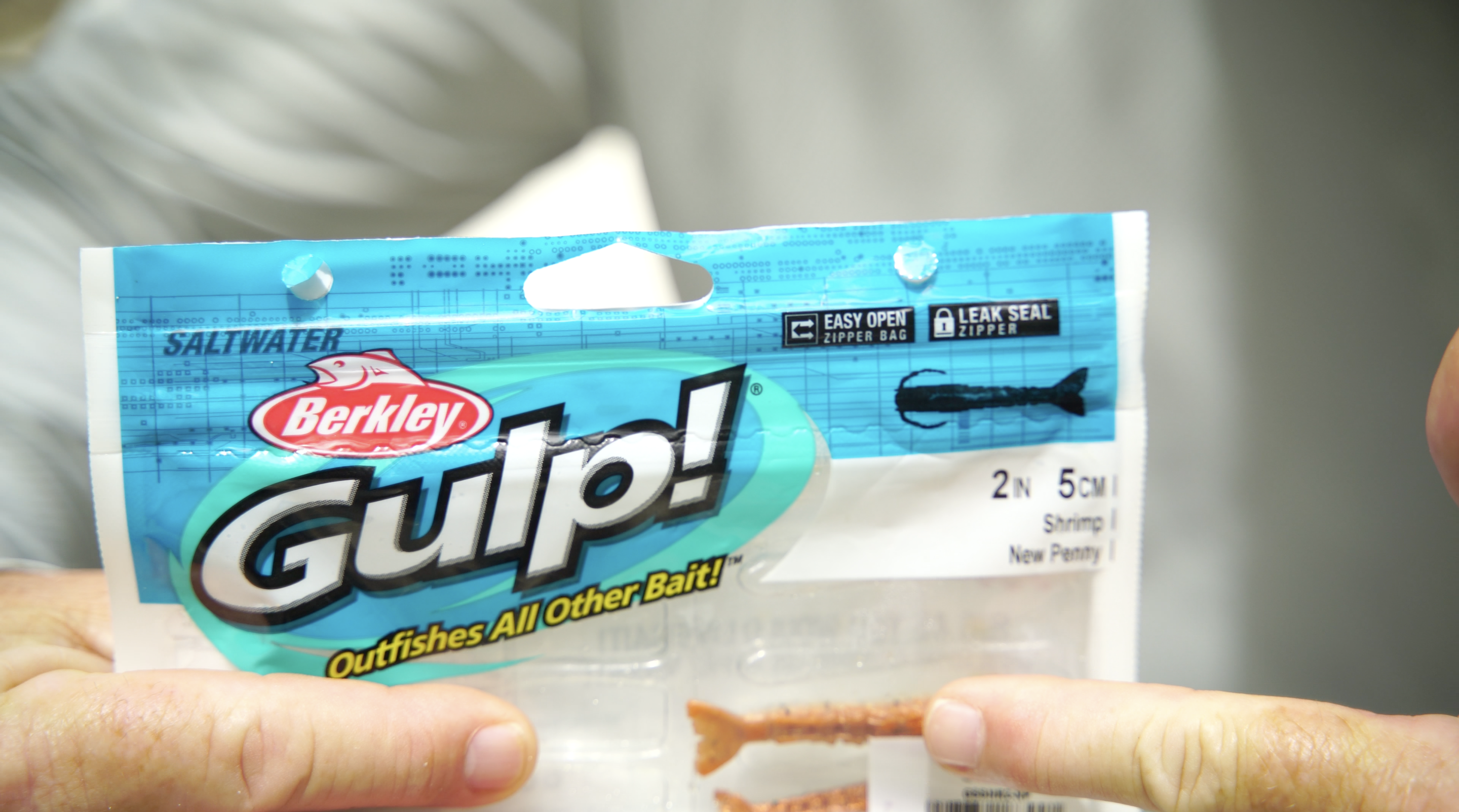
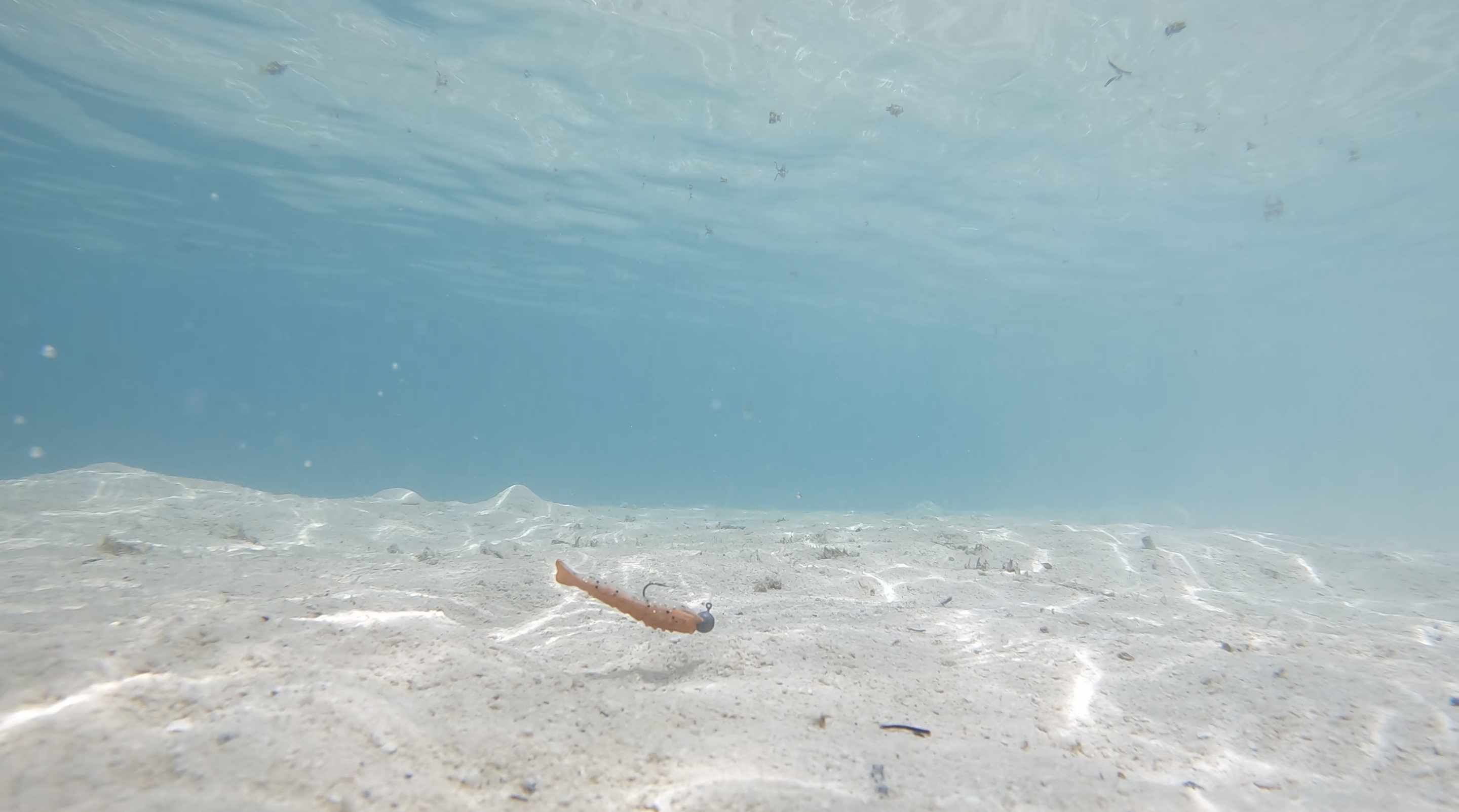
I chose to use a 7 foot, light action Penn Regiment spinning rod, matched with a 4000 size Penn Battle iii reel which was loaded with 25lb Berkley Black Velvet braid and topped off with a 15lb fluorocarbon leader. I opted for some Berkley power jig heads of 1/8th oz moulded onto #4 thin wire hooks.
I found the best artificial bait to use on this was the 2” Berkley Gulp shrimp in the new penny colour.
This setup allowed me a cast of up to around 20m into the wind and 35-40m with the wind behind me. Reaching these distances required a sharp flick of the rod. Casting accuracy is supremely important. Land the lure too close to the fish and it will take off like a bat out of hell, land it too far away and the fish will not be aware of the lure at all.
Other challenges included spooking other unseen fish with the cast which would send the trigger packing as well or getting the perfect cast in only to have the lure eaten by some other small and enthusiastic fish such as a tiny rock cod or juvenile trevally.
I was poled around the flats by my guide, a young American called TJ, who stood on a raised poling platform on the back of the boat and spotted fish for me from his higher perch. He would call out “ two triggers stationary at 9 O’clock, 95 feet” I would have to sight the fish and then make a quick, accurate cast to it before it became aware of our approaching skiff through either water slap on the hull or the end of the pole crunching in the coral sand.
I made casts at many triggers of both species and had many fish take off in terror. I also had some stay put, only to streak off the moment I gave the lure its first twitch on the bottom. Others came over for a look and simply refused to eat. It was pretty frustrating, but that is what trigger fishing is all about. You simply have to make enough casts at enough fish until you find one that reacts the right way and eats the lure.
My moment finally came when I cast at a trigger which charged straight over like an aggressive trevally and tracked the moving lure across the sand. As it got closer I stopped the retrieve and let the shrimp drop onto the sand, holding my breath and hoping that the trigger wouldn’t lose interest.

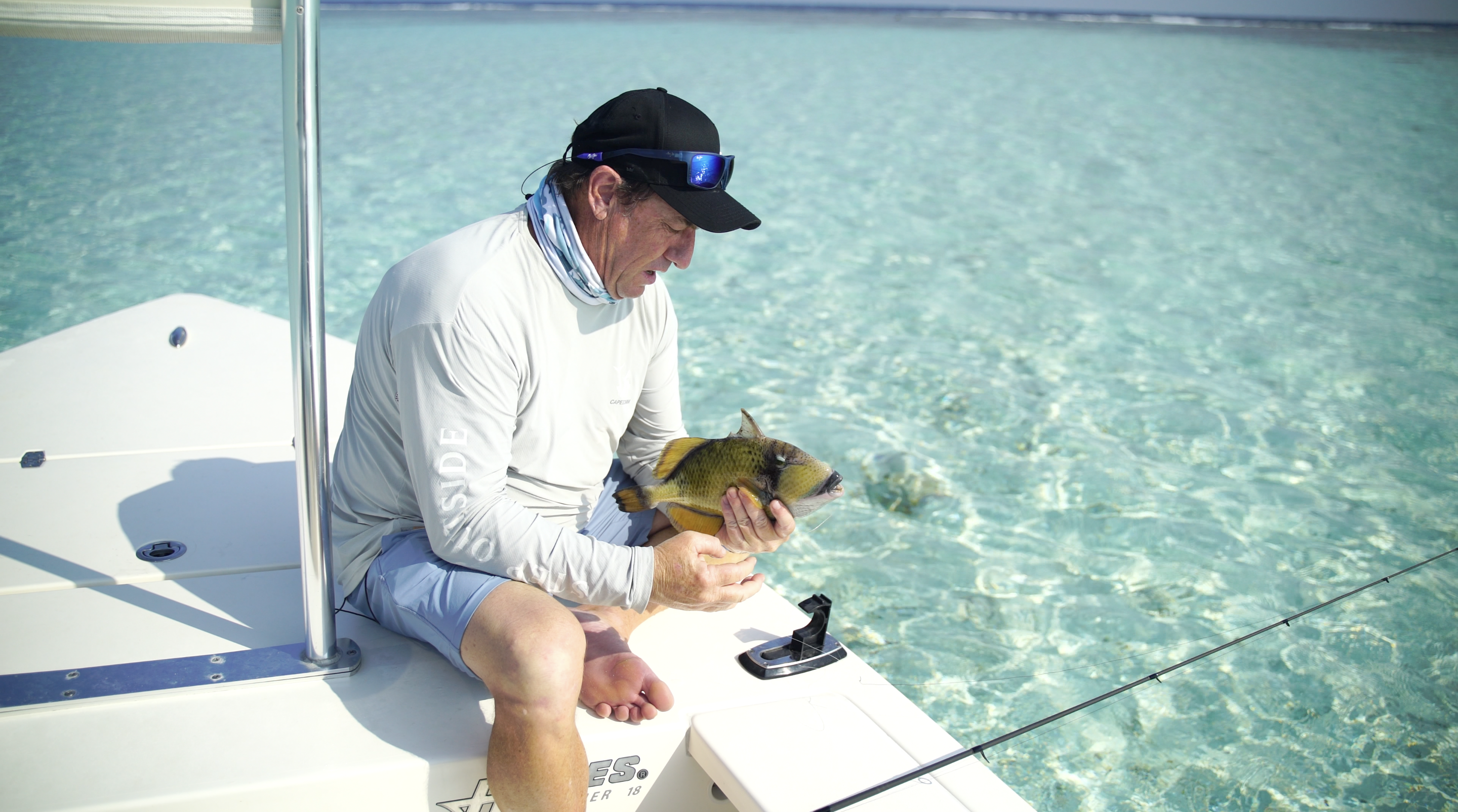
My heart did a double beat when the fish tilted its head down and its tail came up as it came onto the lure and I felt a light twitch on the line. I lifted the rod and the fish exploded into escape mode, pulling my rod down and peeling line from my squealing drag in a sizzling run. I had to drop the rod low and give the fish side strain to stop it reaching some nearby coral.
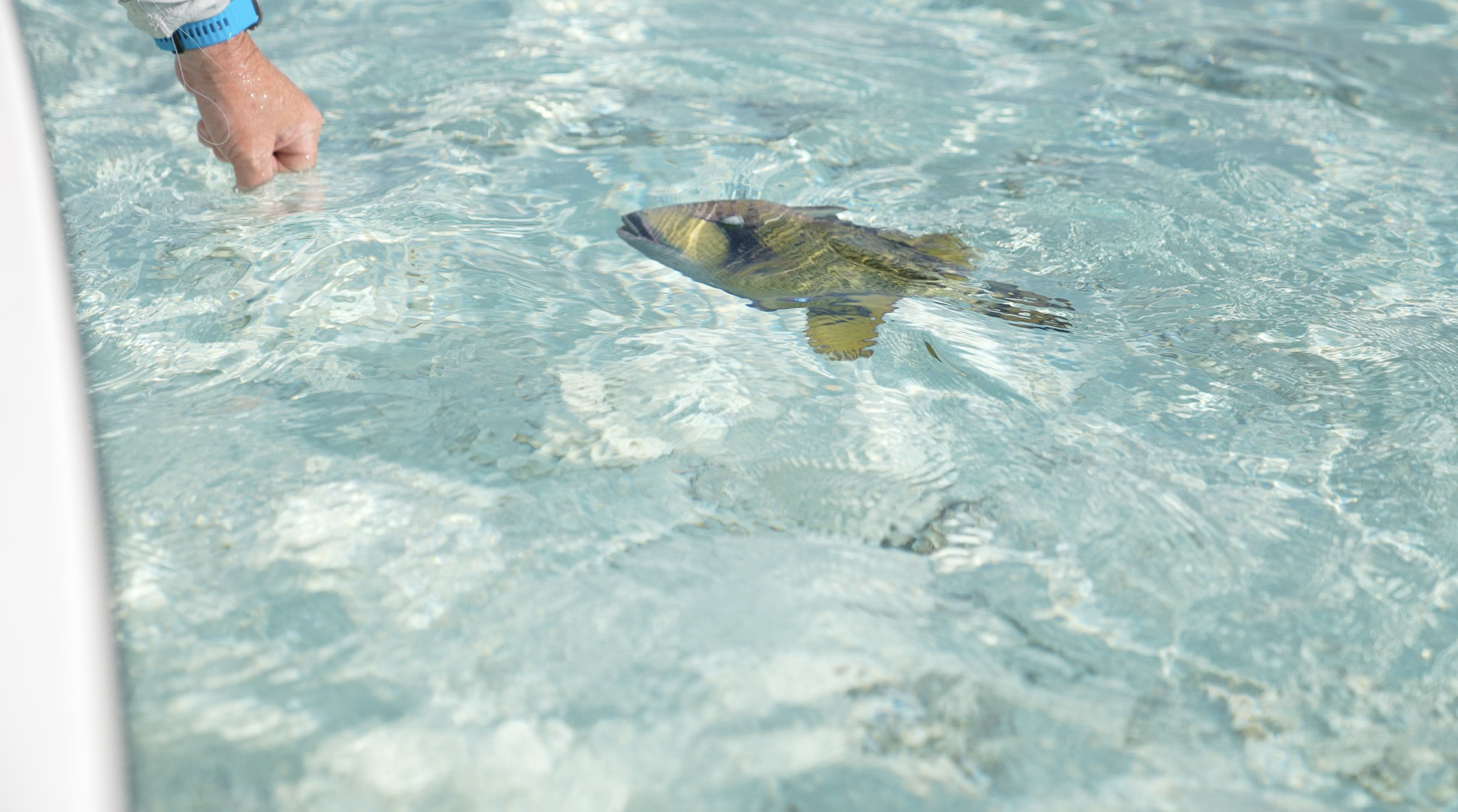
After an impressive fight I finally had myself a beautiful Titan triggerfish at the side of the boat. It wasn’t one of the big monsters that we occasionally saw on our drifts, it was a medium sized fish, but to me at that moment it was the most beautiful fish in the world!
Both TJ and I whooped with excitement, this had been a real challenge and after so many fruitless casts it was an amazing sense of achievement to finally handle one of these incredible, elusive fish.

- Maldives Trigger - April 28, 2022
- Matoya Humpback – Figuring it out - December 15, 2021
- Mixing It Up - November 24, 2021